
Never Focus Solely on Appearance! Wear Resistance Is the Core of Artificial Turf’s Durability!
In the use of artificial turf, wear resistance is a core indicator for measuring its quality and service life. The wear resistance of artificial turf refers to its ability to resist filament breakage, shedding and structural deformation under long-term external forces such as trampling, friction and rolling.
Whether it is a high-frequency sports venue, a crowded commercial square or a family courtyard where children play, artificial turf with insufficient wear resistance will quickly have problems like sparse filaments, exposed base and rough surface, which not only affects the appearance but also reduces use safety and increases replacement costs.
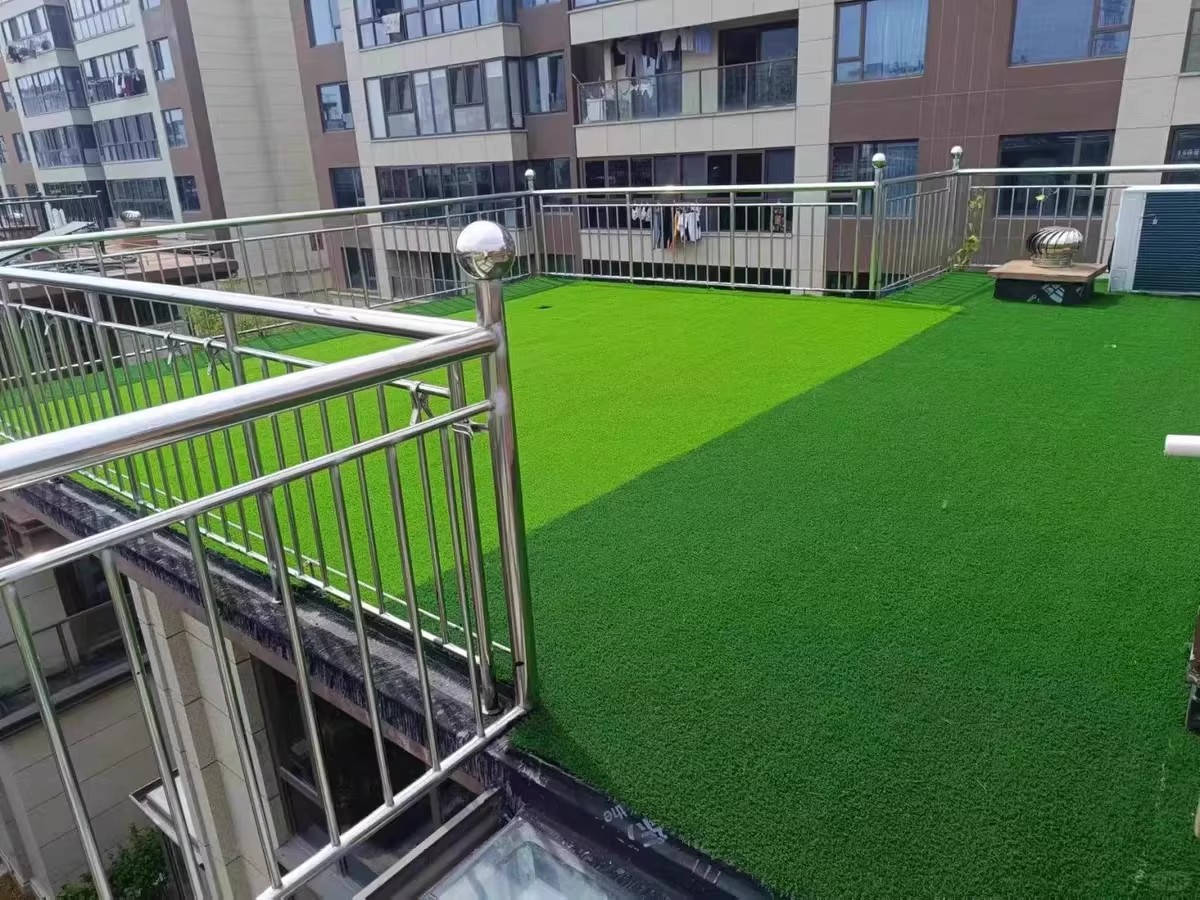 The wear resistance of synthetic grass turf is affected by multiple factors, with material selection as the foundation. In terms of filament materials, nylon (PA) boasts high toughness and excellent tensile resistance, with outstanding wear resistance among all materials, ideal for high-intensity sports scenarios like football and tennis courts.
Polyethylene (PE) features high softness but slightly inferior wear resistance to nylon; after drawing process optimization (e.g., increasing filament diameter, adopting multi-strand braided structure), it can also meet low-to-medium intensity needs such as home courtyards and commercial decorations. Polypropylene (PP) has high hardness but poor toughness and weak wear resistance, more suitable for ornamental scenarios and not recommended for high-frequency trampling areas. Turf filament structure is also crucial: monofilament turf, with uniform structure and dispersed stress, has better wear resistance than fibrillated turf; the filament diameter (usually measured in denier, larger values mean thicker filaments) also affects wear resistance—thicker filaments offer stronger fracture resistance.
To enhance the wear resistance of artificial lawn turf, proper daily maintenance is crucial besides selecting the right product. Avoid direct rolling of sharp objects (e.g., high-heel tips, metal tools) on the turf during use to prevent filament damage; for sports venues, regularly check turf flatness and timely fill the sparse areas caused by wear; avoid high-pressure close-range washing during cleaning to prevent filament shedding due to excessive impact. In addition, check the product's wear resistance test report when purchasing, pay attention to indicators such as Martindale abrasion test and filament tensile breaking strength, and ensure compliance with relevant national standards (e.g., GB/T 20394-2019 Artificial Turf for Sports), so as to guarantee turf wear resistance from the source.
In short, the wear resistance of artificial grass turf is directly related to user experience and economic costs. When purchasing, comprehensively evaluate wear resistance from material and structure based on the usage intensity of the scenario; coupled with scientific maintenance, the artificial turf carpet can maintain good condition for a long time and truly achieve durability and worry-free use.